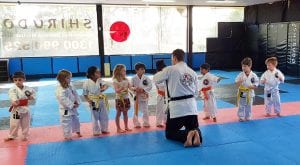
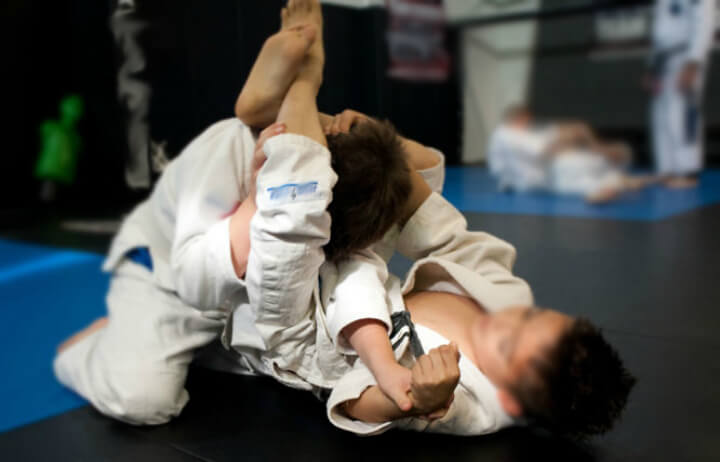
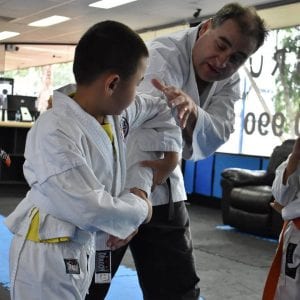
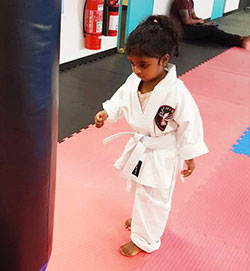
We start Children from the Age of 5
Consistent Practice: Martial arts training requires regular attendance and practice. This install’s a habit of consistency and dedication, which is crucial for academic success.
Self-Control: Martial arts emphasize self-discipline and self-control. Students learn to manage their impulses and emotions, leading to better behavior and focus in the classroom.
Respect for Authority: Martial arts teach respect for instructors and fellow students. This respect often extends to teachers and peers in school, creating a positive learning environment.
Concentration Skills: Martial arts training involves learning complex movements and techniques, which require deep concentration. This practice of sustained attention can improve a student’s ability to focus on their studies.
Mindfulness: Many martial arts incorporate elements of mindfulness and meditation, helping students to stay present and attentive, both in training and in the classroom.
Reduced Distractions: The mental discipline developed in martial arts helps students resist distractions and stay focused on their academic tasks.
Short-term and Long-term Goals: Martial arts training involves setting and achieving both short-term goals (like learning a new technique) and long-term goals (such as earning a new belt rank). This practice teaches students how to set, plan for, and achieve academic goals.
Achievement Motivation: The process of setting and reaching goals in martial arts boosts self-confidence and motivation, encouraging students to strive for and achieve academic success.
Resilience: Martial arts students learn to cope with failure and setbacks, understanding that persistence and hard work are key to achieving goals. This resilience is beneficial in the face of academic challenges.
Studies have shown positive correlations between martial arts training and various aspects of personal development and academic success:
Improved Behaviour: Research indicates that martial arts training can reduce aggression and improve behavior in children and adolescents, leading to a better learning environment at school.
Enhanced Cognitive Function: Some studies suggest that the physical activity and mental challenges inherent in martial arts can improve cognitive function, including memory, attention, and executive function.
Better Academic Performance: There is evidence that students who participate in regular physical activity, including martial arts, tend to perform better academically. This is attributed to improved concentration, discipline, and reduced stress levels.
Martial arts provides teenagers with a structured environment where they can develop discipline, focus, and goal-setting skills. These skills not only enhance their martial arts practice but also translate into better academic performance and personal development. By fostering these attributes, martial arts help students build a strong foundation for success both in school and in life.
Overall, martial arts self-defence can be a valuable and enriching activity for children, promoting their physical, mental, and emotional well-being.
Contact Form
Earn more about our programs, schedule a visit or book a free trial class.
hello@yourdomain.tld
1300 990 525
07am - 09pm
09am - 5pm